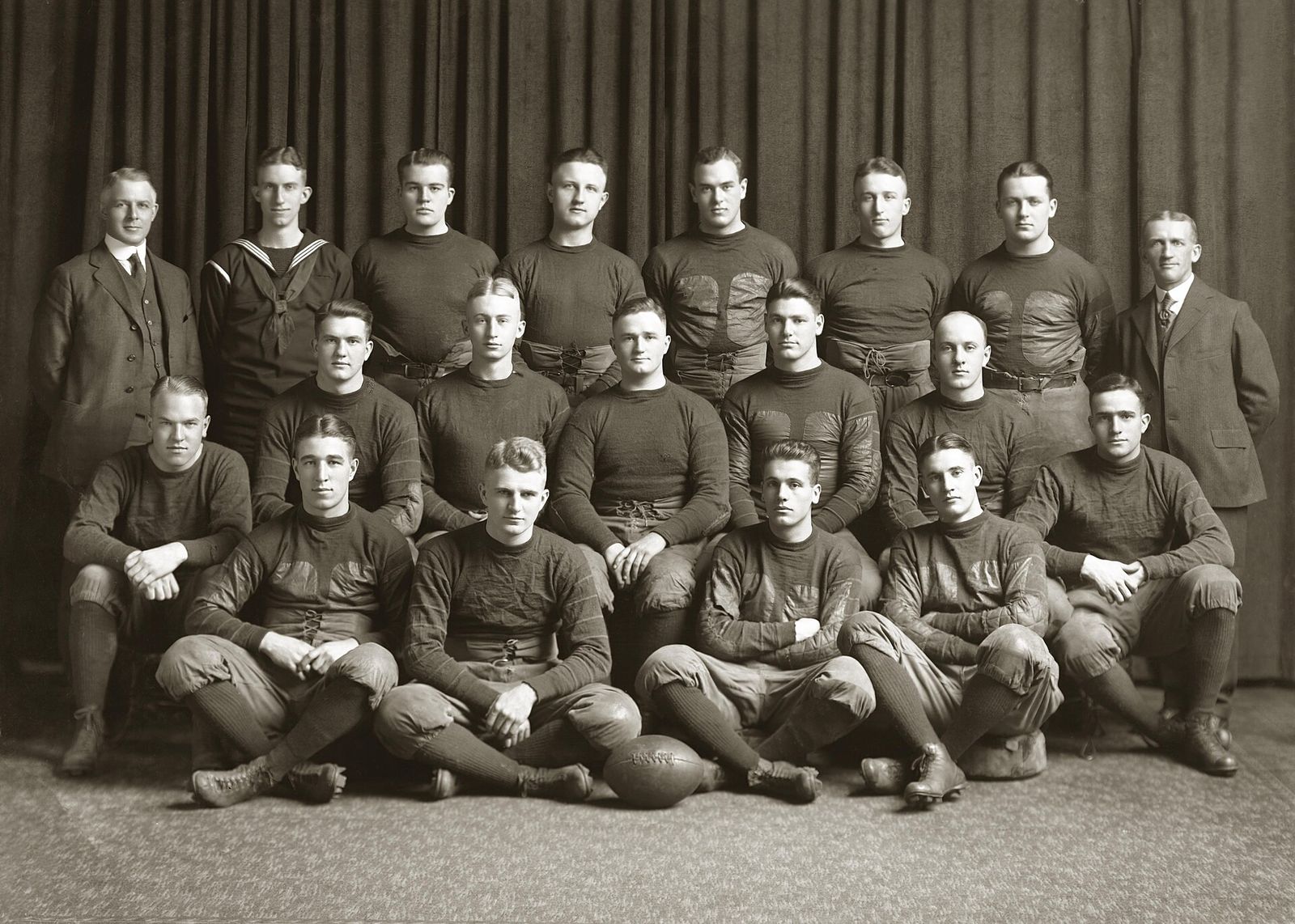
1918 Michigan
5–0 (2–0 Western Conference), coached by Fielding Yost. Share

Schedule and results
- Biggest winBeat Case 33–0Oct 5
By 33 points, its widest win.
| Date | Opponent | Result | Elo |
|---|---|---|---|
| Oct 5 | vsCase | W 33–0 | 92% |
| Nov 9 | atChicago | W 13–0 | 54% |
| Nov 16 | vs Syracuse | W 15–0 | 50% |
| Nov 23 | vs Michigan State | W 21–6 | 76% |
| Nov 30 | vs Ohio State | W 14–0 | 67% |
Elo: a pregame chance from scores alone.
How it ended: Beat Ohio State 14–0; Western Conference champions.
In program history: The 81st-best season in program history by end-of-season Elo (of 140 on file).
Players on this team
Before 2004 our records hold honors and the draft; these are the players whose college years here, from their Wikipedia articles or their honors, include 1918.
National championsa title the school claims
Western Conference champions2–0 in the conference, shared with Illinois and Purdue
A war-shortened season of five games, all wins; Michigan claims a share of the national title.
- Record
- 5–0
- Conference
- 2–0 shared first in Western Conference
- AP poll
- Began in 1936
- Points
- 96–6
- Coach
- Fielding Yost
- Elo
- 1631 +85 this season
- SP+ rating
- —
- Recruiting class
- —
- Captain
- Tad Wieman
All-Big Ten
4 first teamFirst team
 Robert J. DunneE
- Angus GoetzOTHP; MF; WE-1
 Ernie VickCHP; WE-1
- Frank SteketeeRBHP; WE-1
From Wikipedia’s 1918 all-conference team article, with the selectors that named each player (AP-1: the Associated Press’s first team).
1918 Western Conference standings
| Team | Conf. | Overall | AP final |
|---|---|---|---|
 Illinois | 4–0 | 5–2 | |
| Michigan | 2–0 | 5–0 | |
 Purdue | 1–0 | 3–3 | |
 Iowa | 2–1 | 6–2–1 | |
 Minnesota | 2–1 | 5–2–1 | |
 Northwestern | 1–1 | 2–2–1 | |
 Wisconsin | 1–2 | 3–3 | |
 Indiana | 0–0 | 2–2 | |
| Ohio State | 0–3 | 3–3 | |
| Chicago | 0–5 | 4–6–1 |
Ordered by conference winning percentage, then conference wins. Division splits and tiebreakers aren’t applied.